












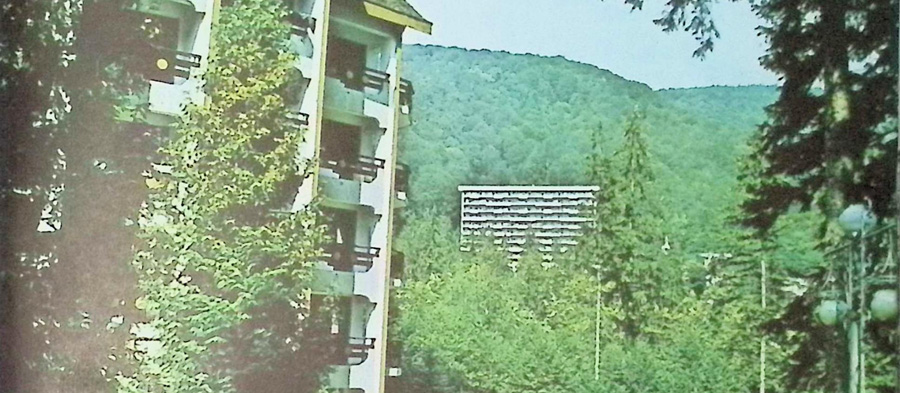
Health Tourism, Nature and Modernization in the Carpathians, 1930-2000
University of Ostrava, Czech Republic
15 June 2027
Organizers: Department of History and the Centre for Economic and Social History
Throughout the twentieth century, the Carpathians became a destination for hiking and sightseeing among elites in East-Central Europe and the emerging working class. The increase in leisure time for the working class, brought about by the gradual introduction of paid vacations in the 1930s, led to a “democratization” of the Carpathian Mountains. Moreover, the establishment of communist regimes in the countries of East-Central Europe after 1945 further accelerated this process and put forth a clear program for the transformation of the Carpathians into a tourist destination. This development was paralleled by the modernization of mountain routes and infrastructure (i.e., road modernization and the construction of mountain hotels and cabins) and by a clearer delineation and popularization of the mountain space through the printing of maps and guidebooks. Last but not least, hiking in the mountains became synonymous with a healthy lifestyle, and government programs in East-Central Europe promoted this form of tourism for both blue- and white-collar workers. Yet after the 1989 revolutions, tourist infrastructure was privatized, and mountain resorts in the Carpathians became less accessible to the working class, while the material heritage of the mountain space was reshaped into a lucrative asset.
The goal of this workshop is to examine how the Carpathian Mountains were transformed into a tourist destination in the twentieth century and how nature, health, and modernization intertwined in the tourist policies, practices, and representations of various political regimes in the region. By using the Carpathian Mountains as an analytical lens, the conference aims to shed light on the connections between tourism and the environment and show how political, economic, and cultural changes in East-Central Europe shaped infrastructure and natural spaces.
We welcome contributions from the fields of history and social sciences, working with historical approaches on topics including but not limited to:
- Politics of mountain tourism
- The building of tourist infrastructure in the mountains
- Mountain tourism promotion and advertising
- Practices of tourism: skiing, hiking, sightseeing
- Health tourism: infrastructure, practices, and experiences
- Material heritage of mountain resorts and their transformation
- Environmental policies in the mountains
- Transformations of mountain landscape
- Maps and guidebooks as forms of representation and knowledge
- Expert knowledge and tourist institutes and centers
- Circulation of knowledge about health tourism and environmental protection
- Sport competitions
We welcome contributions that address topics related to the Carpathian Mountains in Central and Eastern Europe and examine the connections between tourism and the environment from the perspectives of social, political, economic, and cultural histories, while attending to issues such as gender and class.
Confirmed keynote: Patrice M. Dabrowski, Ukrainian Research Institute at Harvard University
The workshop will result in an edited volume published by an internationally renowned academic press. The event will be held in a hybrid format. The organizers cannot cover transportation and accommodation costs, but they can help book affordable accommodation in Ostrava.
Timeline: Please submit a title along with a 250-word abstract and a short bio (maximum 150 words) by December 30, 2026 at . Notification of acceptance by January 30, 2026.
Updated: 19. 10. 2026


